Data Science Weekly – Issue 676
Every week, we write this email to share links we think are worth sharing in the Data Science, ML, AI, Data Visualization, and ML/Data Engineering worlds.
以下正文同步自 Hacker News 最新,版权归原站所有,已转换为易读排版。
Every week, we write this email to share links we think are worth sharing in the Data Science, ML, AI, Data Visualization, and ML/Data Engineering worlds.
Now…let’s dive into this week's interesting links.
With 86% of the words, you might understand only 38% of an anime’s lines
Say you want to watch Frieren, so you learn the 500 most common words in the show. A coverage calculator says that you now know 85.9% of the words spoken. You make tea and press play…By the third pause to look up a word, your tea has gone cold. With those 500 words, you know every word in 1,151 of the first 3,000 lines. That’s 38.4% of them. The other 1,849 lines each contain at least one word you don’t know…Both numbers are true…
My Messy Notes of Learning MICE From Scratch MICE always felt like magic to me 🪄 So I tried rebuilding it from scratch in R to understand it better…We used mulitple imputation by chained equations (MICE) quite often in imputing missing data in many occasion, but I never really understood the mechanism behind it except that it appears magical! 🧙 I want to see if I can build this from scratch as a mean to understand the foundation of MICE so that at least it will give me the illusion of understanding. 🤣 Join me in my messy journey of trying to code it from the ground up (FYI, I’m not coding OLS or MLE from the ground up…), and let’s see if we can create some “magic” here!..
Freedman’s Paradox at Forty: A Practitioner’s Guide to Variable Selection Failures and Safeguards We benchmark 17 end-to-end workflows from five analytical families in a common framework for inferential validity, signal recovery, and predictive calibration. Each workflow is evaluated at its conventional default, and tunable workflows are also traced over prespecified operating paths; valid-inference procedures provide reference points. The design spans six scenarios, seven sample sizes, and nine predictor counts. The aim is practical: to determine which workflows are defensible for inference, prediction, or exploration when selection and reporting are judged together…
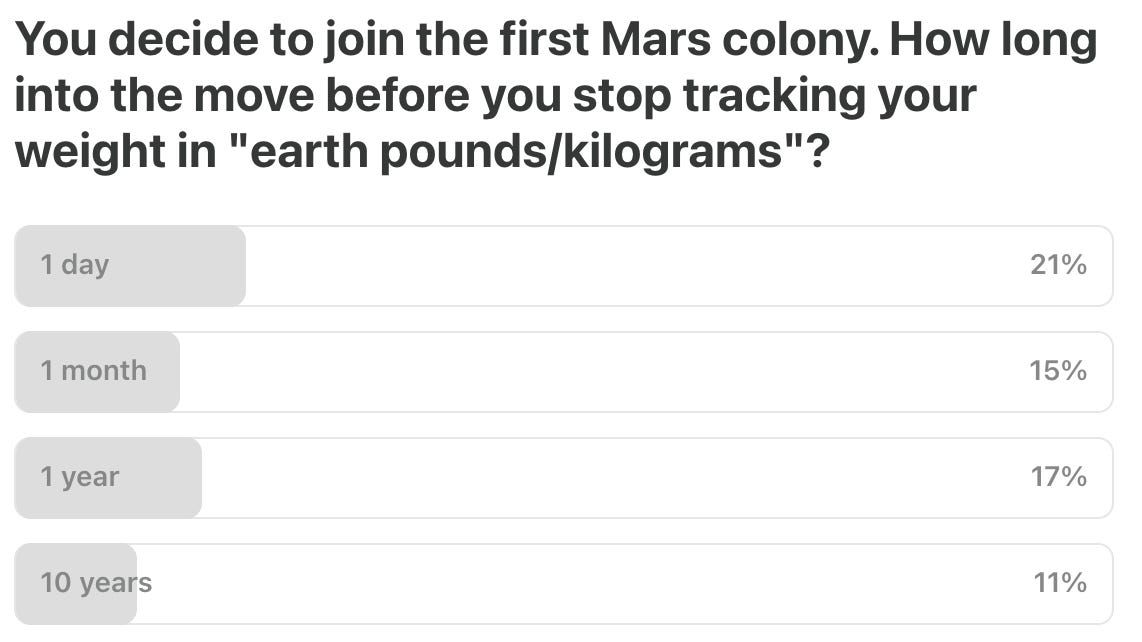
This Week’s Poll:
Loading...
Last Week’s Poll:
.
Euclidean, Spherical, and Projective Geometry Spherical geometry is very tangible because we live on a sphere. Projective geometry seems much more exotic, and yet they’re closely related. To show how they’re connected, let’s go back to the origins of non-Euclidean geometry…
Ask HN: What's your current AI agentic setup? [HN]
I’m curious how people on HN are using AI day to day, and came up with a list of questions I thought could be interesting to know. No need to answer every question of course, just wanted to get a gut feel how people are using AI…
Human Lineage: Everything is connected Human Lineage is one public genealogical graph of humanity. A single shared set of people and relationships that anyone can explore and contribute to. Browse by surname, by place of birth, or follow the family links from any profile…52.9M People and 67.6M Relationships…
Arrows to Arrows, Categories to Queries I’ve had a little time off of work as of late, and been spending it in characteristically unwise ways. In particular, I’ve written a little programming language that compiles to SQL. I call it catlang. That’s not to say that I’ve written a new query language. It’s a programming language, whose compiler spits out one giant SELECT statement. When you run that query in postgres, you get the output of your program. Why have I done this? Because I needed a funny compilation target to test out the actual features of the language, which is that its intermediary language is a bunch of abstract category theory nonsense. Which I’ll get to. But I’m sure you first want to see this bad boy in action…
Galactus the Devourer: On efficient algorithms, the Exponential Time Hypothesis, and losing the plot Today’s post is about the history of failing to rigorously define efficiency in computer science. Like my previous post on Fourier transforms, it’s more technical than usual, but I tried to make it as accessible as possible…
This document aims to be a self-contained, mathematically precise overview of transformer architectures and algorithms (not results). It covers what transformers are, how they are trained, what they are used for, their key architectural components, and a preview of the most prominent models. The reader is assumed to be familiar with basic ML terminology and simpler neural network architectures such as MLPs…
Kindness, Curiosity, and Kitties: A rOpenSci 15th Anniversary Interview with Mo As part of rOpenSci’s 15th anniversary celebrations, Community Manager Yani sits down with community member Athanasia Mo Mowinckel to talk about how a first software review turned into years of involvement across R-Universe, the Champions Program, the Slack community, and core package work. Mo reflects on what has kept her engaged and also offers advice for anyone just discovering this community….
Exploratory Data Analysis Can’t Be Automated Away I think it bears reiteration in the modern age – when doing an analysis, it is still required to personally, manually, look through the data with your own eye balls. Exploratory Data Analysis is simply not something that LLMs can make completely go away, despite how much AI frontier companies, startups, and overly enthusiastic stakeholders want you to believe. For all sorts of reasons. Even in my attempt to actively force the bots to do my job, the end results were just so frustratingly bad that I’m confident in saying that, as of 2026, we are very much not there yet, if we ever are even going to get “there”…
Stratified Modeling for Imbalanced Data - A method for estimating logistic regression with imbalanced data
This paper introduces an approach where multiple logistic regression models are estimated using the minority group and a unique subset of the majority group such that all observations are majority observations are used in exactly one model while the minority group is reused across models. The final model pools the models using Rubin’s Rules defined within the context of multiple imputation (Rubin, 2004)….
Reflections on an AI coding for data analysis workshop Had a fun visit to Perth (Australia) this past week to run a workshop on ‘AI and Data Analysis’ for the Australian Marine Sciences Association, among other things. The workshop, was not surprisingly, mostly attended by professionals and research students working in the marine sciences space. I wanted to share a few reflections and observations on the workshop here. If you want to know what we covered, see my online notes for the workshop content and more…
Attacks on the excessive formalism of economics - on its reliance on abstract models, on its use of too much mathematics - have been a constant for the past 150 years…In this essay I want to make three points. First, much of the criticism of formalism in economics is an attack on a straw man: the reality of what good economists do is a lot less formalistic than the popular image. Bad economists, of course, do bad economics; but one should not confuse a complaint about quality with a complaint about methodology. Second, when outsiders criticize formalism in economics, their real complaint is often not about method but about content - in particular, they dislike "formalistic" arguments not because they are formalistic, but because they refute their pet doctrines. Finally, as a practical matter formalism is crucial to progress in economic thought - even when it turns out that the ideas initially developed with the help of formal analysis can in the end, with some work, be expressed in plain English…
The Little Book of Generative AI Foundations: An Intuitive Mathematical Primer This book provides a compact, derivation-oriented introduction to the mathematical foundations of modern generative artificial intelligence. Rather than surveying every recent architecture or implementation detail, it develops a coherent route through the ideas connecting major families of generative models, from PCA, probabilistic PCA, variational autoencoders, and diffusion models to normalising flows, autoregressive factorisations, GANs, Wasserstein GANs, and energy-based models. The aim is to make the structure of generative modelling more accessible without removing the mathematical substance needed to understand how these models are derived and related. The book is intended as a foundation-building primer for mathematically curious researchers, practitioners, and students…
Understanding LLMs by seeing language as a shadow of a higher-dimensional state (Words are just shadows) Saying that a language model “predicts the next token” describes its training objective, not its inner machinery. Saying it is “a massive pile of matrix multiplications” is technically true, but about as illuminating as defining a restaurant as a building where carbon compounds change temperature. To understand what is actually happening inside the network between the prompt and the reply, we need a better mental model—one designed so that you never get confused by layer counts, floating-point coordinates, or abstract high-dimensional spaces. The easiest way I’ve found to picture what’s happening is through computational shadow art—along with optics like beam splitters, projection, and changing representations. This picture also helps us see where the idea leads…
AI Promised Less Work. I Have Never Worked More
When Do Causal ML Models Beat LM / GLM / GBM? (Nine simulated toy cases with a known true effect)
Screwed up a model in production, feeling super anxious [Reddit]
.
- Based on unique clicks. ** You can find last week's issue #675 here.
Europe’s witch trials: The numbers behind the myth (Were nine million people executed during Europe’s witch trials?)
Modelling cell-type proportions in repeated-measures designs with sccomp: a TMA case study
A performance trap: when store forwarding fails
正文由 探How 从来源站点 RSS 同步,内容未经改写;遇到排版缺失或需要图片、视频时请以原文为准。