The Shady Israeli Executive Running YouTube Music and the Hip Hop Industry
When most people are asked “who controls hip hop?” they are unlikely to think of a 67-year-old Israeli Zionist who comes from a family of Israeli spies and state officials. But Lyor Cohen is the real deal. The brash, ci…
以下正文同步自 Hacker News 最新,版权归原站所有,已转换为易读排版。
When most people are asked “who controls hip hop?” they are unlikely to think of a 67-year-old Israeli Zionist who comes from a family of Israeli spies and state officials. But Lyor Cohen is the real deal. The brash, cigar-smoking 6 ft 5 in head of YouTube Music is the undisputed king of rap, and arguably the most important and influential person in the entire music business.
Entering his fifth decade in the industry, Cohen began his career as the manager of legendary rap group, Run-DMC, and has launched the career of countless hip hop acts, including LL Cool J, Public Enemy, De La Soul, Slick Rick, A Tribe Called Quest, the Beastie Boys, and DJ Jazzy Jeff & the Fresh Prince (Will Smith).
He later moved beyond just rap and worked with stars like Bon Jovi, Mariah Carey, Nickelback, The Killers, Shania Twain, and Elvis Costello.
Throughout his career, Cohen has pushed hip hop to become more profitable and corporate-friendly, and has worked hard to root out what he sees as anti-semitism in the industry, and ensure that the medium does not become a vehicle for revolutionary change or Palestine solidarity.
MintPress explores the story of how a white Israeli-American came to dominate rap.
This is part of a series of investigations examining the relationship between the U.S. national security state and hip hop music. “From Fight the Power to Work for It: Chuck D, Public Enemy and How the CIA Neutralized Rap” explained how Washington works with American musicians to promote regime change in foreign countries.
“Rappers For Regime Change: How the CIA Recruits Hip Hop Artists Around the World” exposed a large network of political rappers quietly on the CIA payroll, promoted by the agency to lead color revolutions across the planet.
“Pull up to the curb, drop head, 2-door Rollsing
If not, make sure you Warn a Brother, Lyor Cohen”
– Vado, feat. Ludacris and Jadakiss, “Check Em Out”
“Rap mogul” was in many ways an unlikely career path for Lyor Cohen. Born in New York in 1959 to Elisha Cohen, an Israeli secret agent, and Ziva Sirkis, an official at the Israeli Embassies to the United States and United Nations, Lyor spent his formative years living in the Israeli settlement of Kfar Haim, near Netanya. Kfar Haim was named after Haim Arlosoroff, a Zionist negotiator who worked with Nazi Germany in the 1930s, transferring German Jews and their assets to historic Palestine.
Although he attended the University of Miami and lived in the U.S. for the majority of his life, he has never shaken his Israeli accent. Cohen grew up privileged, living in the former Hollywood home of comedian Chico Marx. These features made him stand out even more in the world of 1980s rap music.
After graduating, his mother secured him a job at Israeli state-owned financial institution, Bank Leumi. In the wake of the 1978-1979 Revolution, his primary responsibility was assisting Iranian Jews get their money out of the country and into Israeli hands.
Yet Cohen had his heart set on a much more interesting career. His big break in the music industry came after he met brothers Joseph and Russell Simmons. Joseph was one-third of up-and-coming hip hop crew, Run-DMC. Russell co-founded fledgling record label Def Jam and ran Rush, an arts management company responsible for looking after a number of big-name acts.
In 1984, Cohen joined Rush, working as a road manager for Run-DMC, and helping to manage and promote the Beastie Boys, LL Cool J, Public Enemy, and other acts. He quickly worked his way up the ranks, becoming president, CEO, and a major shareholder in Def Jam Records. There, he helped launch the careers of a host of household names, including Ludacris, Redman, Eric B. and Rakim, and DMX. He also began working with Jay-Z after Def Jam bought out Roc-A-Fella records in 1997.
It is no exaggeration to state that Cohen was primarily responsible for mainstreaming rap and turning Def Jam Records into a powerhouse and a cultural touchstone.
By 1999, he and Russell Simmons decided to sell their remaining shares in the company, pocketing a reported $130 million between them. The buyer was a conglomerate that would ultimately become Universal Music Group. Cohen joined Universal and became the head of Island Records, a legendary label that sported the likes of Bon Jovi, Mariah Carey, and Sir Elton John on its roster.
In 2004, he moved to Warner Music, becoming its CEO and president, and mentored the next generation of music executives, such as Julie Greenwald and Todd Moscowitz.
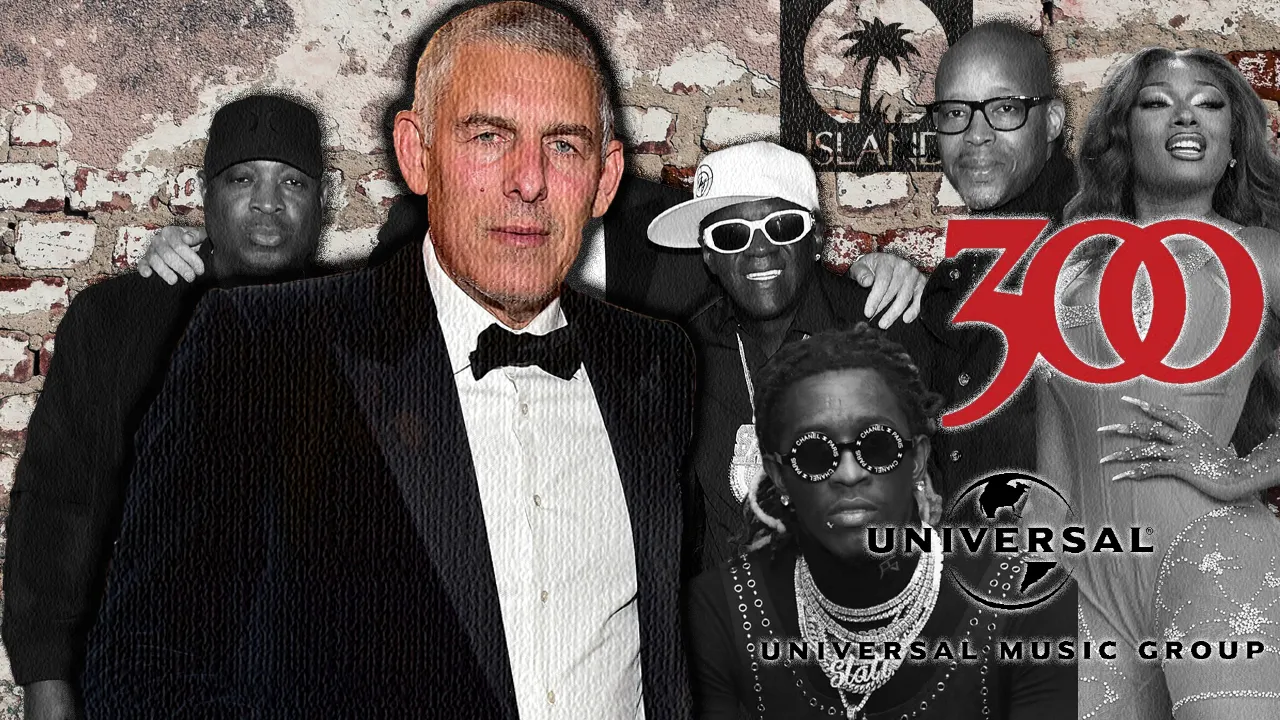
By 2012, however, the music industry was rapidly changing, and Cohen was ready for a new challenge, founding independent entity, 300 Entertainment. The number “300” was a reference to the 300 Spartan warriors who fought at the Battle of Thermopylae, and symbolized Cohen’s vision that a small team of committed and capable individuals could take on the calcifying, backward major labels and win. 300 launched the careers of a number of notable rappers, including Young Thug and Megan Thee Stallion. Warner Music eventually bought the company out for $400 million in 2021.
Cohen was long gone by then, however, as in 2016, he took on his most influential role yet: that of global head of music for Google and Youtube. Over one billion people listen to music on YouTube alone, including 125 million premium paid listeners. In this position, Cohen holds considerable influence over what the world listens to, which artists are promoted, and who is demoted.
In addition, he currently serves on the board of the Rock and Roll Hall of Fame and of the National Independent Venues Association, a group of some 1,500 entertainment venues across America.
Throughout his more than four decades in the business, Cohen has developed a reputation as a hard-nosed negotiator with a talent for spotting stars and making money. In 1986, when rap was aggressively not profit orientated, he brokered a historic $1 million marketing deal between Run-DMC and Adidas, the sports apparel company seeing significant increases in shoe sales after the rap group released their hit track “My Adidas.” The moment was described in Rolling Stone magazine as hip hop’s “tipping point,” where the medium crossed over from the underground into the corporate mainstream.
Cohen also pioneered a financial agreement less popular in the industry: the 360 contract. Before the 360 deal, record labels paid for the recording, manufacturing and distribution of music. In return, they took a cut (usually a majority) of the profits from said sales. Artists would make their money primarily through touring and merchandise sales. The 360 deal, in contrast, took a cut of every conceivable revenue stream an artist had, including ticket sales, merchandise, image rights, movie appearances, and advertising deals. Many complained that 360 deals left seemingly popular and successful artists broke or even in debt.
“Like Lyor Cohen, thoughts start flowin’ when I hear a Def Jam”
Cohen has used his considerable influence to shape rap and to promote causes close to him, including that of Israel and anti-Semitism. During the 2024 election campaign, he donated to the Democratic Majority for Israel (DMFI), a lobbying group that funds right-wing pro-Israel Democrats and attacks candidates advocating for Palestinian rights or statehood.
In 2021, for example, the DMFI endorsed little-known but staunchly pro-Israel candidate Shontel Brown in her contentious face-off for Ohio’s 11th congressional district against Nina Turner, a democratic socialist, national co-chair of Bernie Sanders’ 2020 election campaign, and an outspoken critic of Israel’s policies.
Vast amounts of pro-Israel money flowed into Brown’s campaign, helping her to defeat Turner. In her acceptance speech, Brown praised Israel and later thanked the Jewish community for “help[ing] me get over the finish line.”
The DMFI ran the same playbook against Jamaal Bowman and Cori Bush, and the organization continues to play a key role in stamping out left-wing insurgents within the Democratic Party.
Cohen has also opened his checkbook to directly bankroll pro-Israel Democrats, including Hillary Clinton, Barack Obama, Chuck Schumer and Cory Booker.
In October of 2023, Cohen – who usually avoids the limelight – took to the stage at the Spirit of Life gala in Los Angeles to denounce Hamas’ “brutality” “slaughtering innocent children, women, and men, just because they were Jewish,” and call for a release of captured Israelis.
He later signed an open letter decrying opposition to Israel’s actions in Gaza as inherently racist anti-semitism.
“Hamas, Iran, and their allies and ideological sympathizers in the West have flooded the world with their hateful lies and antisemitic incitement since October 7 — lies designed to demonize Israel, the Jewish people, and their supporters,” the letter begins, taking aim at, “well-meaning celebrities and public figures have been manipulated by this constant stream of misinformation, which they have also helped to amplify.”
The statement’s claims become increasingly extremist themselves, claiming that the phrase “Free Palestine” is “a call to violence” against Jews. Cohen and the other signatories categorically reject that Israel is carrying out a genocide, arguing that accusing Israel of such crimes is a disgusting “blood libel.”
At the same time, however, they insist that the October 7 attacks themselves constitute a “genocidal war on Israel,” and that Hamas alone is responsible for all the deaths caused. “The suffering of civilians in Gaza is a strategy of Hamas,” they explain, as Hamas “leav[es] women and children above ground to be used as their human shields.”
Perhaps the most extreme and contentious statement that Cohen signed onto frames Israel’s murder of hundreds of journalists as justified. “The vast majority of ‘journalists’ pumping out propaganda in Gaza are, in fact, members or supporters of the terrorist organizations themselves,” it claims.
The letter was organized by the Creative Community for Peace (CCP) and signed by many of the most influential executives in the music industry, including multibillionaire entertainment kingpin Haim Saban, Spirit Music Group chairman, David Renzer, and former Atlantic Records Group CEO, Julie Greenwald.
The CCP – an organization MintPress has previously profiled – is an entertainment industry pressure group working to oppose the Boycott Divestment and Sanctions (BDS) movement, and stymie anti-Israel sentiment within the field more generally.
“It’s summertime, but it’s like snowin’ in my watch.
Check the Funk Doc, the Lyor Cohen of the block.”
Cohen’s parents were, if anything, even more involved with the defense and promotion of Israel than their son. Ziva Serkis met Elisha Cohen when she was a nurse tending to his headwounds sustained during the Nakhba – the 1948 ethnic cleansing of around 750,000 Palestinians that allowed for the creation of the State of Israel.
Elisha was a member of the elite Palmach strike force and served in the Harel Brigade, commanded by future prime minister Yitzhak Rabin. The Harel Brigade is infamous for its many crimes in 1948, including carrying out biological warfare against the region’s indigenous population.
After the war, the Cohens moved to New York City, where both would work at the Israeli Embassy, Ziva as an official, and Elisha as security. They would later divorce.
After the 1968 war, Israeli fighters, security, and secret agents were in high demand across the world, and Elisha moved to Nigeria to work on a number of projects. There, he let it be known that he was working for Israeli state intelligence outlets, Shin Bet and the Mossad.
Cohen, an investigation from Israeli outlet Haaretz claimed, spent much of his time building close relations with senior officers in the Nigerian military. But he also forged ties with anti-government rebels in the secessionist state of Biafra.
As the brutal civil war was raging in Nigeria, he was captur
正文由 探How 从来源站点 RSS 同步,内容未经改写;遇到排版缺失或需要图片、视频时请以原文为准。